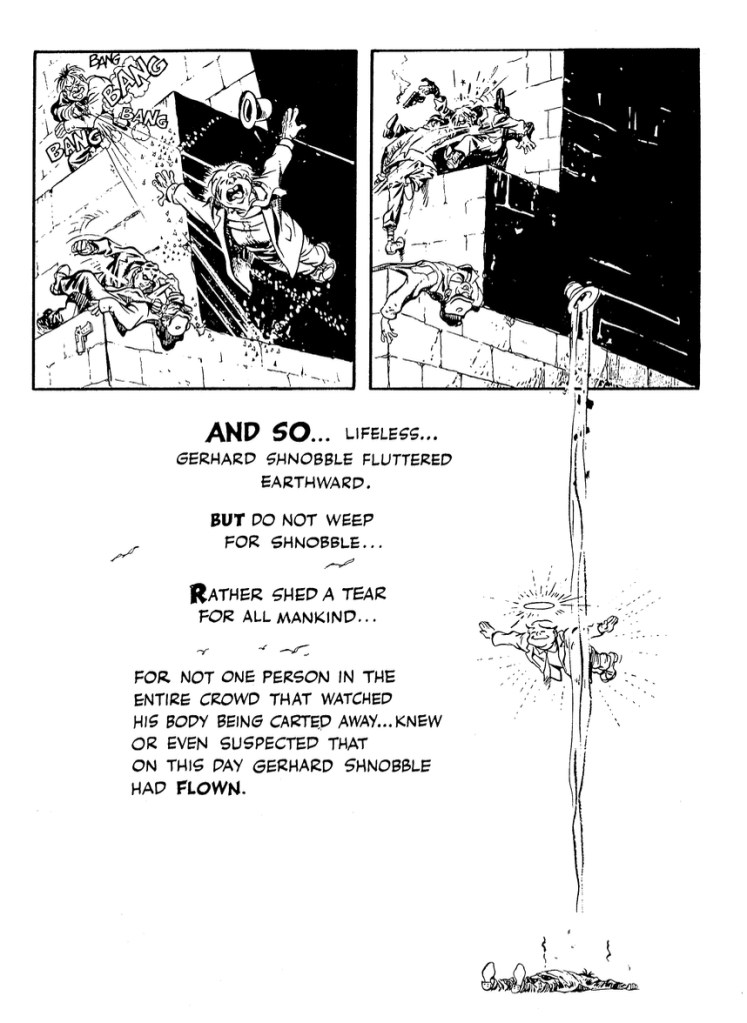
I may be shooting myself in the foot by showing this end page from one of my favorite SPIRIT stories. It’s about a meek little guy who can fly, but he’s too shy to tell anyone, when he finally does and launches himself off a building edge to soar over the heads of the public he gets caught in the crosshairs of a gun battle The Spirit is engaged in and plummets to his death to the streets below, without anyone having noticed he was flying.
If you look at this page above- you’ll see Eisner’s OUTSIDE the box thinking (literally), he builds the page with three images built with two panels at the top, rather than clutter those panels with narrative exposition as a lesser storyteller like myself would do, Eisner lets those images stand alone, and in a poetic fashion handles the narrative free in its own space beside SHNOBBLES corpse, which in the end rises back up in angelic form giving a very sad story the most upbeat ending possible.
Brilliant.
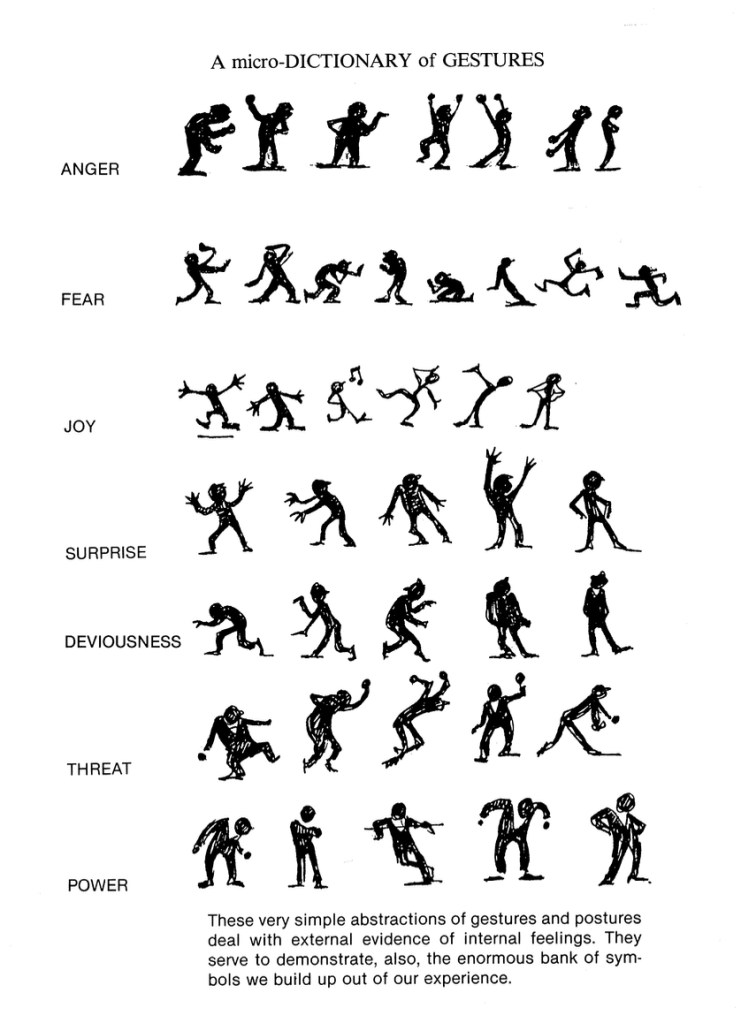
Whereas Eisner gives us simple caveman type doodles of gestures displaying various emotions. Each pose is slightly exaggerated, as with all pantomime it’s important to overplay the gesture to sell it.
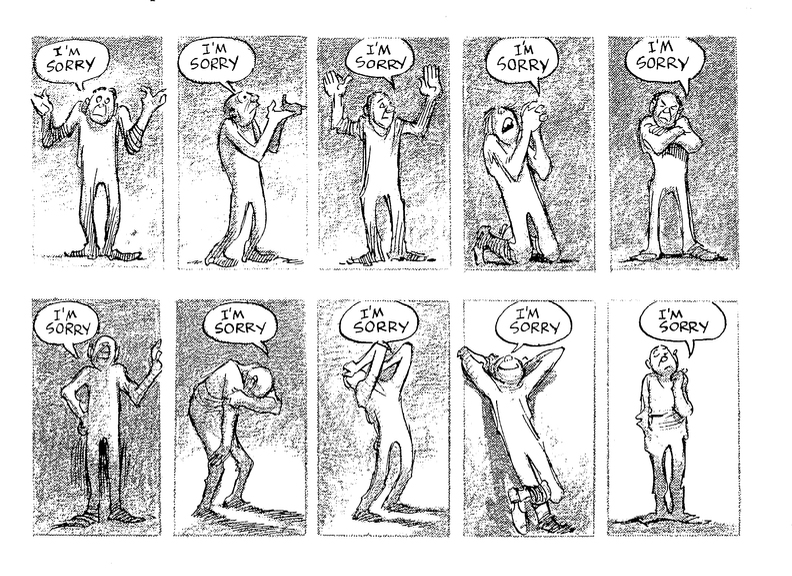
But when we add words to those gestures (and comics are a combination of words & pictures) we can change the way a line is delivered. In the above example you can “hear” the different deliveries of each apology, from sincere to sarcastic. That’s something that can’t be accomplished with either JUST the line or just the image.


Leave a Reply